Showing posts with label Spiritual Master Lives Forever. Show all posts

Chinese philosopher Lao Tzu Biography


Lao Tzu was a man from the Qu Ren village, Li district, Ku Prefecture from Chu Land. His family surname was Li, his first name was Er, his nickname was Dan.

Lao Tzu is believed to have been a Chinese philosopher (a person who seeks to answer questions about humans and their place in the universe) and the accepted author of the Tao te ching, the main text of Taoist thought. He is considered the father of Chinese Taoism (a philosophy that advocates living a simple life).

The main source of information on Lao Tzu's life is a biography written by the historian Ssu-ma Ch'ien (145–86 B.C.E. ) in his Records of the Historian. By this time a number of traditions or beliefs about the founder of Chinese

Taoism were going around, and Ssu-ma Ch'ien himself was unsure of their authenticity. The biography in fact contains an account of not one but three men called Lao Tzu.
The first Lao Tzu was a man named Li Erh or Li Tan, who came from the village of Ch'üjen in the southern Chinese state of Ch'u. Li Erh served as historian in charge of the official records in the Chinese imperial capital of Loyang. He was a peer of the famous Chinese philosopher Confucius (551–479 B.C.E. ), and he is reported to have given an interview to Confucius when he came to Loyang seeking information on the Chou ritual.

Another man identified as the founder of Taoism was Lao Lai Tzu, who also came from Ch'u. He is said to be a person of the same age as Confucius and is credited with a fifteen-chapter book explaining the teachings of the Taoist school. Nothing more is known about the second Lao Tzu.

According to a third account, the original Lao Tzu lived 129 years after the death of Confucius. This man went by the name of Tan, the historian of Chou. Actually, it is impossible to prove the historical accuracy of any of these accounts. Lao Tzu is not really a person's name and is only a complimentary name meaning "old man." It was common in this period to refer to respected philosophers and teachers with words meaning "old" or "mature." It is possible that a man who assumed the pseudonym (assumed name) Lao Tzu was a historical person, but the term Lao Tzu also was used as a substitute title to the supreme Taoist classic, Tao te ching (Classic of the Way and the Power).

According to Ssu-ma Ch'ien, Lao Tzu had been serving in the Chou capital for a long time. He became unhappy with the dishonest political situation and decided to go into retirement. As he was passing through the Hanku Pass west of Loyang, the gate-keeper stopped him and asked him to write down a book of his teachings. Lao Tzu then composed a book of five thousand sayings in two sections that described the theory of the tao and te. This book was then known as the Tao te ching.

Lao Tzu is frequently associated with the other famous early Chinese thinker, Confucius. There are numerous stories about debates that supposedly took place between these two great philosophers in which Lao Tzu was always the winner. These stories are undoubtedly anti-Confucian publicity circulated by members of the Taoist school, perhaps as early as the fourth century B.C.E.

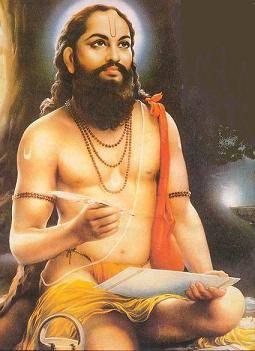
Enlightened Master jai jai raghuveer samarth Maharaj


Bhagwan SriKrishna had given a promise that he would take rebirth (reappear) when there would be religious-darkness. He also promised that he would again lay the foundation of Dharma through Karma, Knowledge, Upasana and Vedas.

As if, to fulfill this promise, a boy named Narayana was born on Chaitra-Shuddha 9 Shake 1530 that is in 1608 AD.

It was an auspicious day of Ramnavmi. Suryajipant and Ranubai were his parents. They were living in the village Jamb. His parents were the sincere worshipers of ‘Surya’ and ‘Rama’. Narayana always told his parents that he was deeply engaged in thinking of the welfare of the whole world. He expressed his desire to obtain his elder brother Gangadgar’s blessings. Gangadhar tried to convince him that Narayana was still very young to bear the ‘Anugraha’ but this made Narayana very unhappy.
At last unhappy Narayana went to temple ‘Maruti’ where, in the midnight he could see the God, real God. Narayana insisted upon the ‘Anugraha’. At the same time he could see “ Prabhu Ramachandra ” who blessed him and named him as “ Ramadas “ and advised him to lay the foundation of Dharma.
Narayan’s father, Suryajipant, was no more and his mother often asked him to get married immediately. She also asked him not to say no till the Antarpat was held. Narayana accepted his mother’s suggestion. He obeyed her and placed himself on the marriage vedi. But when the holy rhymes were sung and as soon as he heard the word ‘Sawadhan’, thinking that he had fulfilled the promise given to his mother he ran away from the place. He was just 12 years old at this time. It was not an easy and ordinary thing to dedicate one’s own life for the betterment and welfare of the world.


Ran-off from his native place, Narayana came straight to ‘Panchwati at Nasik’. He visited Lord Rama’s temple there and reached ‘Takali’, where he lived from 1620 to 1632. Here he spent his life in ‘Gayatri - Purashcharan’ and completed 13 cores Ramnama recital.
During the 12 years he spent all his time in meditation. He went from house to house and asked ‘Madhukari’ for his meals. Along with meditation he did exercises ‘Suryanamaskar’. He could see the God Rama and Marutiraya with his own eyes. He was advised to undertake the work of welfare of the world by doing Upasana and establishing Dharma. He started his valuable work of Dharmodhar, Janodhar and Rashtrodhar from this time.
As per God Rama’s advice he travelled through the whole India from 1632 to 1644.


While travailing , he came into contact with different people of different caste and creed. He could learn exact about the public and social conditions. At that time the rulers were very cruel and unjust, who tried to demolish and destroyed Hindu-temples. The ignorant and poor Hindu ladies were raped and misused and spoiled. There was nothing but darkness. People had to face all such cruelty helplessly.
They were so poor and weak that they were quite unable to raise their heads and hands to protest it. Sri Samartha had closely observed it and decided to increase their physical power by way of unity and also the importance of trust on Prabhu-Ramchandra.He tried his best to enlighten their lives.


While bringing these reforms he asked people that God is part and parcel of their lives.
He visited hundreds of holy places like Kashi, Gokul, Mathura, Vrindavan, Dwarka, Shrijagnnath, Shrirameshwar, Lanka Gokarn-Mahableshwar, Karveer, Dakshin-Kashi, Shri-Parashuram etc.

During his journey he setup nearly 1100 Maruti-temples.These are the centers where peoples comes together .He also appointed his devotees to look after these temples. This planning clears his foresight. Through Ramopasana and balopasana he wanted to build well-cultured and healthy society. It was his real dream.
After visiting various holy places he returned to his native place Jamb in the year 1644. He had an emotional meeting with his mother and brother. Then he again returned to Krishna valley.
At this time Chatrapati Shivaji Maharaj had started establishing his political power. He came to Masur but his camp was always in Dervan-valley, Waghapur-sada, Bhairavgad or valley of Kalamba.

Among all his Maruti idols, idols at Chaphal Shahapur, Masur Umbraj, Shirala, Pargaon, Majgaon, Bahe-Borgaon and Manpadale are very important. He also stared celebrating Ramnavami Festival at Masur. At the same time Prabhu-Rama gave him drishtant. Samartha found Rama’s and Mahishasur mardini’s idols in the deep pond of Angapur. He set up God Rama’s idol at Chaphal Samartha was bringing religious and national awareness while Chatrapati Shivaji Maharaj was trying to establish Hindu-swaraj.


Now fame of Samarth reached far and wide.Shivaji Maharaj was very keen to meet him. But unfortunately he could not see him at Masur. So he went back to Pratapgad. One day Shivaji Maharaja saw Samarth’s divine appearance in the night. When Shivaji Maharaja woke up in the morning he found a coconut which was given to him by Samartha as a token of blessings. So King Shivaji came to Mahuli to see Samartha . At the same time a disciple came from Samartha with a letter for King Shivaji.


Samarth had praised Shivaji Maharaj in this letter. King Shivaji in his reply letter expressed his strong desire to see Samarth. King Shivaji presented himself at Masur. When he heard that Samartha was at Shinganwadi, he went there. Here met the two great personalities of different fields, different aims and of different dreams, in 1649. This was their first meeting. Here Samartha gave him ‘Anugraha’. Here onwards their relations became closer, loving and respectful.
King Shivaji Maharaj requested Samartha to live at Rajgad, Pratapgad or on the fort of Parali. As per King King Shivaji’s request Samarth Ramdas came to Parali in 1676. From that time onwards the fort was recognized and known as ‘Sajjangad’.
Samartha set up the idol of goddess Mahishasurmardini at the eastern side of the Sajjangad which was found in the pond at Angapur and was named ‘Angai’ or ‘Anglai’. He also set up the idol of Maruti at the west to protect the Sajjangad and this ‘Maruti’ is known as ‘Dhabyacha Maruti’. While he was living on Sajjangad, Chatrapti Shivaji Maharaj left this world for ever. He left this world in 1680. Samartha became very sad. When he had gone to Tanjawar, he had in his mind to set up the idols of Shriram, Laxman and Seeta and Maruti there.
Sri Samartha asked Vyankoji Raje to find out a good artist. Vyankoji Raje found an artist who was blind. But Samartha took from him the idols. Magh Vadya 5, Shake 1603 that is in the year 1682 (English Year), the images were brought and were set up in his bed-room (Shejghar) and he himself worshipped them.
Samartha has written books on Philosophy & religion: it is seldom compared to ocean. ‘Samartha wrote Manacheslok’ which became more famous . Ramdas also wrote ‘Dasbodha’ which is equally valuable as the ‘Manacheslok.Samarthas literature clears the darkness of spirutual aspirants and has been source of inspirations to thousands.


Dasbodha’ took birth in the Shivtharghal, which has complete base of religious mindedness of Sri Samarth Ramdas Swami. One can carry out his human duties through reading, thinking of Dasbodha.


This clears the very valuable importance of ‘Dasbodha’. It is very useful not only to saints learned but also to common people. It can enlighten not only to ‘Mumukshu’, ‘Sadhaka’ and ‘Siddha’ but also to very very common people. It is just like a lighthouse in ‘Parmarth’, to wise men and ignorant, for ‘Viveka and Vairagya’, happiness and worries’.

It touches religious and social life, political and common life. After the departure of Chatrapati King Shivaji Maharaja he felt that he had nothing left undone in his life. So he left this world on Magh 9, Shake 1603 that is in the year 1682 (English Year) on the Sajjangad.


Sri Krishna -The Great Spiritual Master Lives Forever


In 3228 BCE in Mathura, India, a child was born who was destined to reshape the spiritual and temporal destiny of mankind—Sri Krishna. In his 125 years of life, Sri Krishna made an indelible impression upon mankind's collective consciousness—re-educating the world about devotion and dharma as well as the ultimate reality. His life was a model for people in days past, the modern world and surely for those in ages to come. Seeing Krishna as a perfect personification of divinity, to this day hundreds of millions of people pray to him, chant his names, meditate on his form and try to put his teachings into practice. His life has inspired a treasure house of poetry, music, painting, sculpture and other fine arts. As Amma says, "His glory is unsurpassable. His story is a source of joy and inspiration for people from all walks of life."


A child, a brother, a charioteer, a warrior, a disciple, a guru, a cowherd, a messenger, the beloved of the gopis... Throughout his life, Krishna enacted so many roles—the whole time never forgetting that they were just that, roles, and that his true nature was eternal, ever blissful consciousness. In this way, he was able to remain detached and thus perform flawlessly, never allowing the smile to fall from his face. This, Amma says, is perhaps his greatest teaching.

"There have been very few who have been able to rejoice both in victory and in defeat," Amma says. "Sri Krishna is one who celebrated both. That is why he was always able to give a big smile. He took birth with a smile on his face, lived with a smile, and left his body with a smile. The message that he conveyed through his life is that we should make life full of laughter."

Krishna's life was so full, it would be impossible to recount it all here. It is told primarily through Srimad Bhagavatam, Garga Samhita, Visnu Purana, Brahmavaivarta Purana, Mahabharata, Harivamsa and several other puranas. However, here are some of the broad strokes.

Krishna, in fact, took birth in a prison cell. A sage had told his egoistic uncle, King Kamsa, that he would be killed by his sister Devaki's child. So Kamsa imprisoned Devaki and had each child she bore murdered. However, Devaki, and her husband, Vasudeva, finally were able to sneak one child off to safety. This was Sri Krishna. They sent Krishna off to Vraja, where he was raised by a foster mother, Yasoda. It was in Vrindavan, one of the villages of Vraja, that Krishna won the hearts of the gopis, the cowherds of the village. "By spending all his time with the gopis of Vrindavan—playing with them, joking with them, stealing their butter and milk, etc—what he actually was doing was stealing their hearts," Amma says. It is from this that Krishna was given the name "Chitta Chora" [one who steals the mind].

Kamsa sent many assassins to kill Krishna, but none of them were able to do so. And in the end, Krishna returned to Mathura and killed Kamsa, restoring dharma to the land.

In fact, Krishna never returned to Vrindavan. The pain of separation was unbearable for the gopis. It drove their minds into a fever pitch, wherein their every thought was of Krishna. Through this, their minds were purified and they slowly became able to see their Beloved in all things: in the trees, in the rivers, in the mountains, in the sky, in all people, and animals—even in their own selves. This was the realization that Krishna had intended to bring about within them from the very beginning.

The devotional fervor Krishna created in the gopis is perhaps best exemplified by the rasa-leela dance, wherein each of hundreds of gopis perceived the eight-year-old Krishna to be dancing with them alone. Amma says, "The rasa-leela did not take place on the ordinary plane of the senses, the way people today interpret it. During the rasa-leela the gopis experienced the beatitude of the jivatma merging in the Paramatma. Because of their divine love, the Lord appeared to each of the gopis. With his power, he blessed each gopi with a vision of the Self."


Radha is said to have been the most devoted of the gopis. Theirs was the highest love—a love to inspire mankind forward on the path to God. Amma has even said: "Krishna's lifting of the Govardhana Mountain as a child was not the real miracle; the real miracle was the gopis' love for Krishna."

The next major role in Krishna's life was as a friend to the Pandavas, five devoted and dharmic brothers whose kingdom was usurped by their 100 half-brothers, the egoistic and adharmic Kauravas. In the eventual war between the two, Krishna served as the charioteer of the Pandava Arjuna. And it was also to Arjuna that he advised the 701 verses of The Bhagavad-Gita (the centerpiece of The Mahabharata). It is the Gita that stands as Krishna's most important gift to the world. In fact, some people believe that the whole purpose of Krishna's birth was to deliver this "Song of the Divine." It comprises Krishna's advice to Arjuna on the cusp of the Mahabharata War. The Gita delivers the essence of spirituality in a way that the common man can understand. As the great Swami Chinmayananda often said, "With the Gita, Sri Krishna took the knowledge of the Upanishads down from the Himalayas and into the marketplace." Here was a true handbook for life delivered by the Lord himself. Amma herself says, "One studies the Gita to become Krishna."

"Lord Krishna's teachings are suitable for everyone," Amma says. "He didn't come just for the sake of a particular section of society. He showed everyone—even prostitutes, robbers and murderers—the path toward spiritual progress. He urges us to live according to our true dharma, to remain steadfast in it, and thus advance in life toward the ultimate goal."

Krishna's instructions were not just for monks. He advised everyone to his capacity. His instruction to Arjuna, in fact, was to remain in the world, performing his dharma. "His life was a perfect example of how to remain unscorched in the midst of worldly fire," Amma says. "It is like keeping a piece of chocolate on your tongue without salivating. ... He shows how to succeed in life while remaining in the midst of obstacles. The Lord doesn't advise us to turn away from our relationships in order to attain Self-realization. He explains that we should be free from all attachments while still maintaining loving relationships and upholding our family responsibilities."

Lord Krishna left his physical form at 125 at the hands of a hunter. But he died as he was born and as he lived—with a beatific smile upon his face. In fact it is said that his final act was to bless the hunter who had accidentally shot him. Such was his love.

Amma says, "Throughout his life, Lord Krishna had to face different crises that arose like waves, one after the other. Even then, not once was his countenance clouded by sorrow. He faced every difficulty under the sun, but there was no place for sorrow in Sri Krishna's presence. He was the embodiment of bliss. In his company everyone rejoiced, forgetting all else. In his presence they tasted the bliss of the Self. Even now, after all this time, doesn't the mere thought of him fill us with bliss?"


 Selected quotes from Srimad Bhagavad Geeta, as preached by Lord Sri Krishna:


"It is true that the mind is restless and difficult to control. But it can be conquered, Arjuna, through regular practice and detachment. Those who lack self-control will find it difficult to progress in meditation; but those who are self-controlled, striving earnestly through the right means, will attain the goal."

"Thinking about sense-objects Will attach you to sense-objects - Grow attached, and you become addicted - Thwart your addiction, it turns to anger - Be angry, and you confuse your mind - Confuse your mind, you forget the lesson of experience - Forget experience, you lose discrimination - Lose discrimination, and you miss life's only purpose"

"For certain is death for the born... And certain is birth for the dead... Therefore over the inevitable Thou shouldst not grieve..."

"On action alone be thy interest... Never on its fruits... Let not the fruits of action be thy motive, Nor be thy attachment to inaction."

"Knowledge, the object of knowledge and the knower are the three factors which motivate action; the senses, the work and the doer comprise the threefold basis of action"

"Those who eat too much or eat too little, who sleep too much or sleep too little, will not succeed in meditation. But those who are temperate in eating and sleeping, work and recreation, will come to the end of sorrow through meditation."


"Whatever I am offered in devotion with a pure heart - a leaf, a flower, fruit, or water - I accept with joy."

"They, whose mind and intellect are absorbed in the Self, who remain firmly attached with the Self, who have Self as their supreme goal, whose sins have been destroyed by the knowledge, do not take birth again."