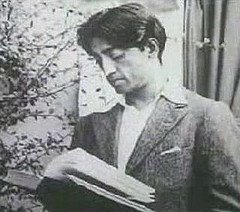
Showing posts with label Famous Quotes By Osho. Show all posts

Wholeness of Life :Reason and logic have not solved our human problems


Reason and logic have not solved our human problems, and we are going to find out if there is quite a different approach to all the problems and travails of life. We shall come upon something that is beyond reason; for reason has not solved any of our political, economic or social problems; nor has it solved the intimate human problems between two people. It becomes more and more obvious that we live in a world that is going to pieces, that has become quite insane, quite disorderly and a dangerous place to live in. Up to a point we must reason together, logically, sanely, holistically; then, perhaps, beyond that point, we shall be able to find a different state, a different quality of mind, not bound by any dogma, by any belief, by any experience and therefore a mind that is free to observe and through that observation see exactly "what is" and also find that there is energy to transform it.

One must not start from any conclusion, from any belief, from any dogma which conditions the mind, but from a mind that is free to observe, to learn, to move and act. Such a mind is a compassionate mind for compassion has no cause; it is not a result. Compassion comes when the mind is free and it brings about a fundamental psychological revolution. That psychological revolution is what we are concerned with from the beginning to the end.

So we will begin by asking ourselves: What is it that we are seeking? Physical comfort? Physical security? Deep down, is there the demand or desire to be totally secure in all our activities; in all our relationships to be stable, certain, permanent? We cling to experience that gives us a certain quality of stability, or to a certain identification which gives us a sense of permanency, well-being. In a belief there is security; in identification with a particular dogma, political or religious, there is security. If we are aged, we find security or happiness in the remembrance of things past, in the experiences that we have known, in the love that we have had, and we cling to the past. And if we are young and cheerful we are satisfied for the moment, not thinking about the future or the past. But gradually youth slips into old age with the desire to be secure, with the anxiety of uncertainty, of not being able to depend on anything or anybody, yet desiring deeply to have something secure to cling to.

We have to examine closely whether there is psychological security at all. And if there is no psychological security will a human being go insane; will he become totally neurotic, because he has no security? Probably the majority of human beings are somewhat neurotic. A Communist, a Catholic, Protestant or Hindu, each is secure in his belief; he has no fear because he clings to it. And when you begin to investigate, or question, or reason with him he stops at a certain point and will not examine further, it is too dangerous, he feels his security is being threatened; then communication ceases. He may reason, think logically up to a certain point but is incapable of breaking through to a different dimension altogether; he is stuck in a groove and will not investigate anything else. Does that really give security? Does thought, which has created all these beliefs, dogmas, experiences, divisions, give security? We function with thought; all our activity is based on thought, horizontal or vertical; whether you are aspiring to great heights it is the movement of thought vertically; or whether you are merely satisfied to bring about a social revolution and so on it is the horizontal movement of thought. So does thought fundamentally, basically, give security, psychologically? Thought has its place; but when thought assumes that it can bring about psychological security then it is living in illusion. Thought wanting ultimate security has created a thing called god; and humanity clings to that idea. Thought can create every kind of romantic illusion. And when the mind, psychologically, seeks security in the dogma of the Church, or some other dogmatic assertion, or whatever it is, it is seeking security in the structure of thought.

Thought is the response of experience and knowledge, stored up in the brain as memory; that response is therefore always moving from the past. Now, is there security in the past? Please use your reason, logic, all your energy to find out. Can any activity of thought, which is essentially of the past, give security? Follow the sequence of it; in that which it has created it seeks security and that security is of the past. Thought, though it may project the future, says: "I am going to attain godhood", yet that movement of thought is essentially from the past. Or, recognizing there is no security in the past, thought then projects an idea, an idealistic state of mind and finds security in the hope of that in the future.

A human being, throughout life, depends on thought and the things that thought has put together as being most essential, holiness, unholiness, morality, immorality and so on. Someone comes along and says: "Now look, all that is the movement of the past." Having reasoned with him, logically, the other says: "Why not, what is wrong with holding on to thought even though it is of the past"? He acknowledges it, and says: "I'll hold to it, what is wrong?" Yet when the human mind lives in the past and when it holds to the past, then it is incapable of living, or perceiving truth.

We come to a certain point and we say: "Yes, I see and I recognize logically, that in those things there is no security and when they are questioned there is fear." And when we say we see that, what do we mean by that word "see"? Is it merely a logical understanding, a verbal understanding, a linear understanding, or is it an understanding which is so profound that that very understanding breaks down, without any effort, the whole movement of thought? When you say: "I understand what you are saying", what do you mean by that word "understand"? Do you mean you understand the English words? Is it an understanding of the words, the meaning of the words, the explanation of the words and therefore an understanding only at a very superficial level? Or, is it that, when you say "I understand", you mean you actually "see", or observe the truth as to what thought is; you actually feel, taste, observe in your blood as it were, that thought, whatever it creates, has no security? You "see" the truth of it and therefore you are free of it. Seeing the truth of it is intelligence. Such intelligence is not reason, logic, or the very careful dialectical explanation; the latter is merely the exposition of thought in various forms; and thought is never intelligent. The perception of the truth is intelligence; and in that intelligence there is complete security. That intelligence is not yours or mine; that intelligence is not conditioned - we have finished with all that. We have seen that thought in its very movement creates conditioning and when you understand that movement, that very understanding is intelligence. In that intelligence there is security, from that there is action.

We may talk about this question in different ways, in different fields, such as fear, pleasure, sorrow, death, meditation, but the essence of it is this: thought is the movement from the past, therefore of time and therefore measurable. That which is measurable can never find the immeasurable, which is truth. That can only take place when the mind actually sees the truth that whatever thought has created, in that there is no security; the very observation of that is intelligence. When there is that intelligence then it is all finished. Then you are out of this world, though you are living in it; though trying to do something in it, you are completely an outsider.

Jiddu Krishnamurti. 

Be Ego less And All The Grace Of God Is Yours - OSHO


What is the ego? 

Are we always functioning through the ego or are there moments when we are free of it?…..Man has no center separate from the center of the whole. There is only one center in existence; the ancients used to call it Tao, dhamma, god. Those words have become old now; you can call it truth. There is only one center of existence. There are not many centers, otherwise the universe would not be really a universe, it would become a multiverse. It is a unity, hence it is called the “universe”; it has only one center.

To survive, and to struggle for survival in the fight of life, everybody needs a certain idea of who they are. And nobody has any idea. In fact nobody can ever have any idea, because at the deepest core you are a mystery. You can’t have any idea of it. At the deepest core you are not individual, you are universal.

That’s why if you ask the Buddha, “Who are you?” he remains silent, he does not answer it. He cannot, because now he is no more separate. He is the whole. But in ordinary life even Buddha has to use the word ‘I’. If he feels thirsty he has to say, “I am thirsty. Ananda, bring me a little water, I am thirsty.

For example, you have a name. That is a fiction. You came without a name, you did not bring a name with you, the name was given to you. Then by constant repetition you start becoming identified with it. You know your name is Rama or Rahim or Krishna. It goes so deep that if all you three thousand sannyasins fall asleep here and somebody comes and calls, “Rama, where are you?” nobody will hear except Rama. Rama will say, “Who has come to disturb my sleep?” Even in sleep he knows his name; it has reached to the unconscious, it has seeped through and through. But it is a fiction.

But when I say it is a fiction I don’t mean it is unnecessary. It is necessary fiction, it is useful; otherwise how are you going to address people? It will be difficult if nobody has a name. Although nobody has a name in reality, still, it is a beautiful fiction, helpful. Names are needed for others to call you, ‘I’ is needed for you to call yourself, but it is just a fiction. If you go deep into yourself you will find the name has disappeared, the idea of ‘I’ has disappeared; there is left only a pure am-ness, is-ness, existence, being.

And that being is not separate, it is not yours and mine; that being is the being of all. Rocks, rivers, mountains, trees, all are included. It is all-inclusive, it excludes nothing. The whole past, the whole future, this immense universe, everything is included in it. The deeper you go into yourself, the more and more you will find that persons don’t exist, that individuals don’t exist. Then what exists is a pure universalness. On the circumference we have names, egos, identities. When we jump from the circumference towards the center, all those identities disappear.

The ego is just a useful fiction.

Use it, but don’t be deceived by it.

Source:  Osho Speaks On Ego

Osho speaks on Jesus


No other book starts that way, no other book can start that way. The
Bible is 'the book of the books': that is the exact meaning of the word
'Bible' -- the Book. It is the most precious document that humanity
has. That's why it is called 'The Testament', because Jesus has
witnessed to God in it: Jesus has become the witness to God, a
testament. It is the only proof possible. God cannot be argued, but
only a man like Jesus can become a proof for him.
The Gospel carries all that is beautiful in Jesus' flowering, the
Beatitudes. Those statements are the most beautiful ever made. Not even
Buddha, not even Lao Tzu, have spoken that way. Buddha is very
philosophic, very refined; Jesus is very plain, simple. Jesus speaks
like a villager, a farmer, a fisherman. But because he speaks the way
common people speak, his words have a solidity, a concreteness, a
reality.
Buddha's words are abstract; they are very very high words,
philosophical. Jesus' words are down-to-earth, very earthly. They have
that fragrance of the earth that you come across when the rains have
started and the earth is soaking up the rains and a great fragrance
arises -- the fragrance of the wet earth, the fragrance that you find
on a sea beach, the fragrance of the ocean, the trees. Jesus' words are
very very earthbound, rooted in the earth. He is an earthly man, and
that is his beauty. Nobody else can be compared with that beauty.
The sky is good, but abstract, far away, distant.
So I say to you, no other book starts the way the Gospel starts; no
other book talks the way the Gospel talks.

The word 'gospel' comes originally from a word GODSPEL. God has spoken
through Jesus. Jesus is just a hollow bamboo. The song is of God, and
Jesus' metaphors are very true to life. He is not spinning concepts, he
is simply indicating the truth as it is.

First the beginning: 'The book of the generation of Jesus Christ, the
son of David, the son of Abraham. Abraham begat Isaac; and Isaac begat
Jacob; and Jacob begat Judas... And Judas begat Phares... and Phares
begat Esrom; and Esrom begat Aram...' and so it goes, on and on. And
then: '... Jacob begat Joseph. the husband of Mary, of whom was born
Jesus. who is called Christ.'

Then this genealogy stops suddenly. Forty-two generations have passed
from Abraham to Jesus. The Gospel records the forty-two generations,
and then suddenly Jesus is born and the genealogy stops. Suddenly there
comes a full point. because Jesus is the fulfilment; there is no
beyond. Jesus is the culmination -- there is no way to go further on.
So 'Abraham begat Isaac, Isaac begat Jacob...' -- it continues. Then
there is no way to go beyond Jesus: the ultimate has come. Jesus is the
flowering and the fulfilment. That's why the Bible calls Jesus the
PLEROMA, the fulfilment.

Those forty-two generations are fulfilled in Jesus. The whole history
that has preceded Jesus is fulfilled in him. The home has arrived. He
is the fruit, the growth, the evolution of those forty-two generations.
Jesus is the fulfilment, that's why the Gospel does not say anything
further. Jesus did not beget anybody, Jesus begat himself. And that is
the meaning of the word 'Christ'.

There are two kinds of births. One, through others -- from the father,
from the mother -- that is a bodily birth. The other birth you have to
give to yourself, you have to be born out of yourself; you have to
become the womb, the father and the mother and the child. You have to
die as the past and you ate to be born as the future. You have to beget
yourself. That's why I say that the book starts in an incredibly
beautiful way -- very significant: Jesus begat nobody, Jesus begat
himself.

That is the meaning of crucifixion and resurrection. The body is
crucified, you cannot crucify the spirit. You can destroy the body. you
cannot destroy the spirit. The body is gross: the sword can cut it, the
poison can kill it; and even if nothing is going to kill it, death is
going to come and the body will be gone. It has to go, it is meant to
go; it is only there for the time being. Those who are conscious, they
use that time to create spirit in them.

The body is like grapes. The grapes are to go.
You cannot keep grapes for long -- they will go rotten; but you can
create wine out of the grapes, that's why it is also called 'spirit'.
You can create spirit in your being, a wine. Grapes cannot be
accumulated, they are temporary, momentary. But wine can stay forever.
In fact, the older it becomes the more precious and valuable it is. It
has a nontemporal duration, it is something of eternity.
The body is like the grapes, and if you use it rightly you can create
the wine in you. The body is going to disappear, but the wine can
remain, the spirit can remain.


Jesus has done many miracles. One of the miracles is his miracle of
transforming water into wine. These are metaphors -- don't take them
literally. If you take them literally, you destroy their meaning, their
significance. And if you start proving that they are historical facts,
then you are stupid, and with you Jesus also looks stupid. They are
metaphors of the inner world.
Read More 

Famous Quotes By Osho


1If you take the responsibility for your life you can start changing it. Slow will be the change, only in the course of time will you start; moving into the world of light and crystallization, but once you are crystallized you will know what real revolution is. Then share your revolution with others; it has to go that way, from heart to heart.

2A fool is one who goes on trusting; a fool is one who goes on trusting against all his experience. You deceive him, and he trusts you; and you deceive him again, and he trusts you; and you deceive him again, and he trusts you. Then you will say that he is a fool, he does not learn. His trust is tremendous; his trust is so pure that nobody can corrupt it. Be a fool in the Taoist sense, in the Zen sense. Don't try to create a wall of knowledge around you. Whatsoever experience comes to you, let it happen, and then go on dropping it. Go on cleaning your mind continuously; go on dying to the past so you remain in the present, herenow, as if just born, just a babe. In the beginning it is going to be very difficult. The world will start taking advantage of you...let them. They are poor fellows. Even if you are cheated and deceived and robbed, let it happen, because that which is really yours cannot be robbed from you, that which is really yours nobody can steal from you. And each time you don't allow situations to corrupt you, that opportunity will become an integration inside. Your soul will become more crystallized.

3A man who lives through conscience becomes hard. A man who lives through consciousness remains soft. Why?--because a man who has some ideas about how to live, naturally becomes hard. He has continuously to carry his character around himself. That character is like an armor; his protection, his security; his whole life is invested in that character. And he always reacts to situations through the character, not directly. If you ask him a question, his answer is ready-made. That is the sign of a hard person--he is dull, stupid, mechanical. He may be a good computer, but he is not a man. You do something and he reacts in a well- established way. His reaction is predictable; he is a robot. The real man acts spontaneously. If you ask him a question, your question gets a response, not a reaction. He opens his heart to your question, exposes himself to your question, responds to it....

4A master in Zen is not simply a teacher. In all the religions there are only teachers. They teach you about subjects which you dont know, and they ask you to believe because there is no way to bring those experiences into objective reality. Neither has the teacher known them - he has believed them; he transfers his belief to somebody else. Zen is not a believers world. It is not for the faithful ones; it is for those daring souls who can drop all belief, unbelief, doubt, reason, mind, and simply enter into their pure existence without boundaries. But it brings a tremendous transformation. Hence, let me say that while others are involved in philosophies, Zen is involved in metamorphosis, in a transformation. It is authentic alchemy: it changes you from base metal into gold. But its language has to be understood, not with your reasoning and intellectual mind but with your loving heart. Or even just listening, not bothering whether it is true or not. And a moment comes suddenly that you see it, which has been eluding you your whole life. Suddenly, what Gautam Buddha called "eighty-four thousand doors" open.

5A really religious person has no theology. Yes, he has the experience, he has the truth, he has that luminosity, but he has no theology.

6A Zen master used to say, "It is clear and so it is hard to see. A dunce once searched for a fire with a lighted lantern. Had he known what fire was, he could have cooked his rice much sooner."

7All beings are from the very beginning Buddhas. It is like water and ice: Apart from water, no ice, outside living beings, no Buddhas. Not knowing it is near they seek it afar, what a pity!